Radiology is one of the key methods of modern diagnostics that has been helping doctors look inside the human body for over a century. But how exactly does an X-ray machine work, what is behind the process of obtaining images, and how safe is this procedure for patients? In this article, we will thoroughly examine the physical principles of radiography, the stages of image formation, and the safety of conducting this type of examination today.

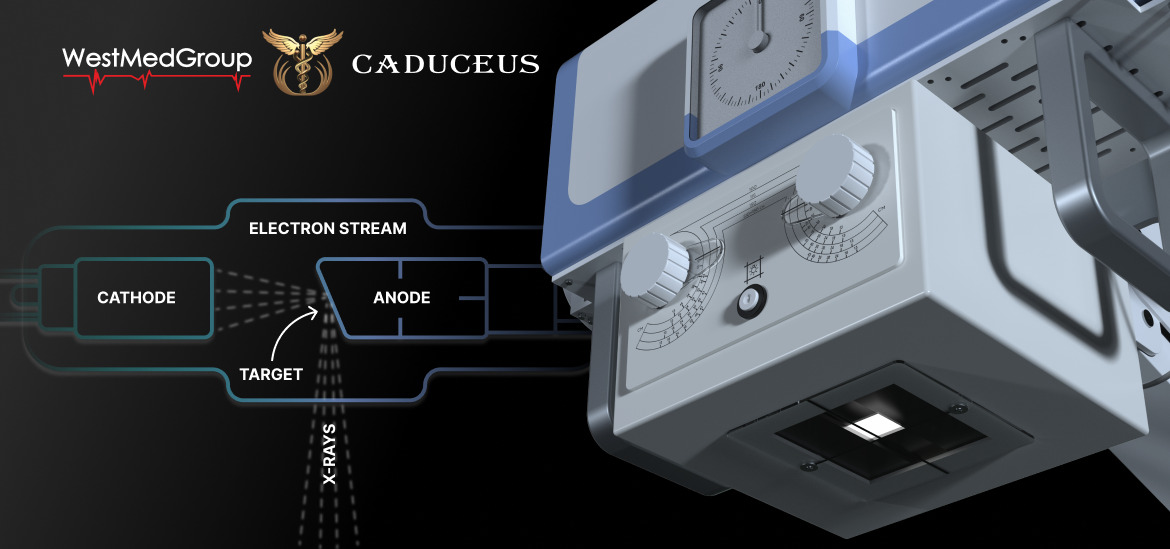
The operating principle of modern X-ray machines is as follows: inside a special component known as the X-ray tube, a cathode is located. When an electric current is applied, it heats up and emits a stream of electrons. These electrons are accelerated by a powerful electric field and directed towards the anode at the other end of the tube. Upon colliding with the anode, they decelerate abruptly, resulting in the generation of X-ray radiation—electromagnetic waves of a specific range capable of penetrating various materials.
As X-rays pass through the human body, they are absorbed by different tissues to varying degrees. Dense structures, such as bones, absorb most of the radiation, appearing as bright areas on the image. Softer, less dense tissues (muscles, fat) allow more rays to pass through, which is why they appear as dark areas and shades of gray on the resulting image. This contrast provides a visualization of the patient's internal structures, enabling physicians to identify injuries and pathologies.

When discussing the safety of X-ray machines, one cannot ignore the opinion of some old-school medical professionals who claim that such procedures are harmful to health. Indeed, older film-based machines could be a cause for concern due to their higher radiation levels. In contrast, modern digital X-ray systems minimize radiation exposure thanks to precise power adjustment and very short exposure times.
Thus, the use of modern X-ray installations has become not only a safe but also a convenient tool in the hands of doctors across various specialties.