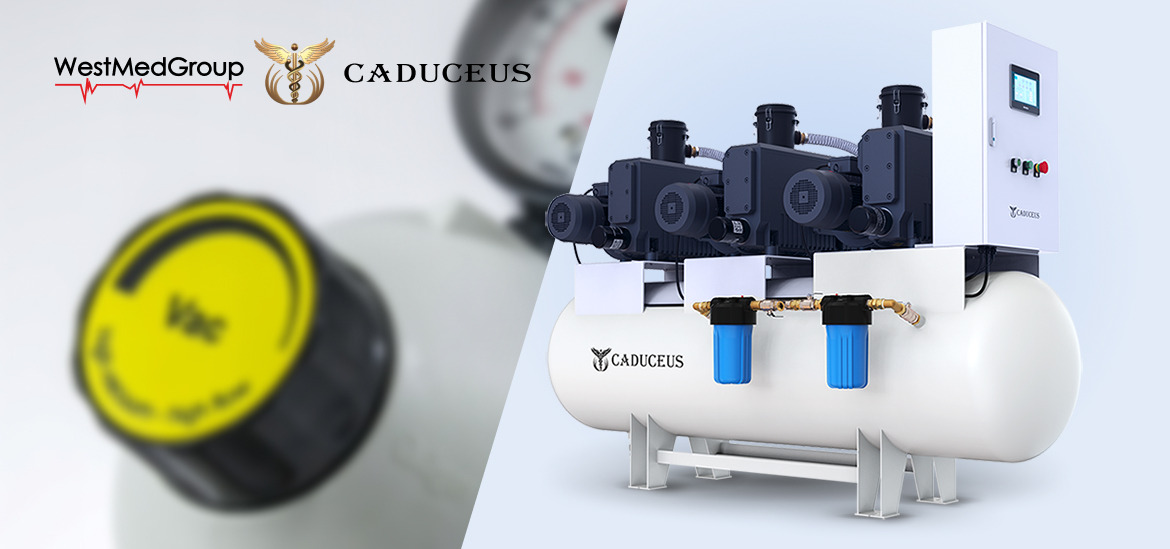
Vacuum stations are a key element of equipment in a modern medical facility. They provide stable vacuum generation, essential for surgical operations, resuscitation, dental, and cosmetic procedures. The correct choice of a vacuum station directly impacts equipment reliability, patient safety, and staff efficiency.

There are several types of vacuum stations, each designed differently to solve various tasks in medical institutions. For example, CADUCEUS VAC D vacuum stations create a clean vacuum without using oil or other working fluids. They feature a control system with a touch display and the ability to adjust vacuum supply according to current needs. They are used where sterility and uninterrupted operation are crucial: from operating rooms and large clinics to industrial facilities.
In CADUCEUS VAC vacuum stations, unlike the previous model, oil is used for lubrication and sealing, which enhances pump reliability and allows for cascade connection. This ensures stable vacuum even under high load. Such stations are durable and are often installed in large medical institutions where long-term, uninterrupted operation is important, and vacuum purity is not a critical factor.
Where speed is vital, MIL’S HOSPIVAC stations are used. They quickly generate the required vacuum and adapt to changing demands. These units are found in both small facilities and multidisciplinary hospitals where instant response is needed. And where compactness is key, such as in small production sites or dental and cosmetic procedure rooms, MINIVAC vacuum stations are employed. They are easy to connect and maintain, providing sufficient vacuum volume for minor procedures.
It’s important to remember: the ideal vacuum station is one that matches the tasks and specifics of your institution. The right equipment ensures reliable operation, resource savings, and comfort for the staff.